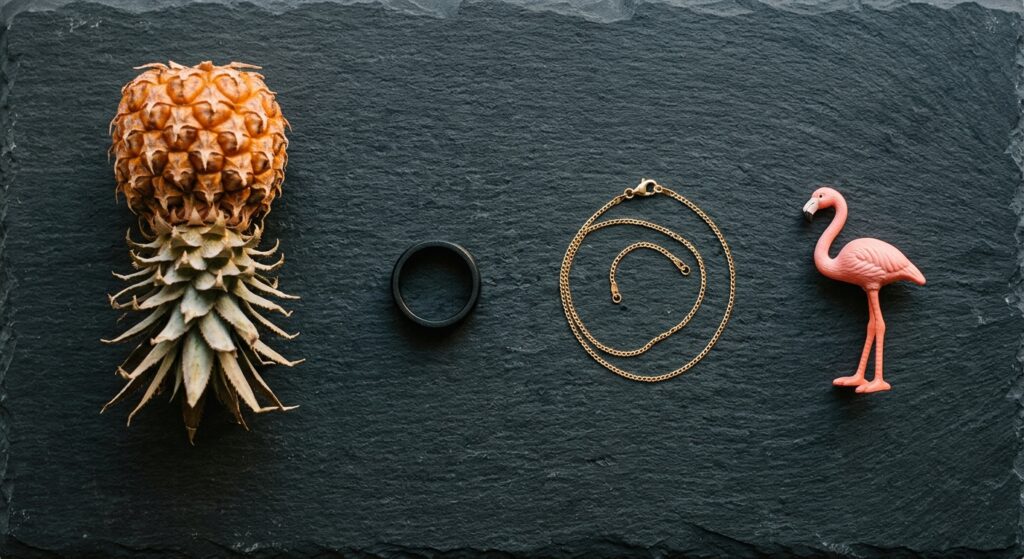

Short answer: lifestyle symbols are small, deniable signals (an upside-down pineapple, a black ring on the right hand, a particular anklet) that people in the swinging and non-monogamy communities use to identify each other without saying anything out loud. Some are genuine conventions. Most of what you’ll read online is invented.
That second part is where every other guide falls down. So let’s do this properly: what’s real, what’s folklore, and how to tell the difference.
Why coded signals exist at all
The entire point is plausible deniability.
If you’re in the lifestyle, you have a specific problem. You’d like the right people to recognize you, and you’d very much like your neighbor, your boss, and your kid’s soccer coach not to. A signal that works has to be invisible to everyone who isn’t looking for it, which means it has to look like something else entirely.
That’s why the good ones are all mundane objects. A pineapple is a decoration. A black ring is jewelry. An anklet is an anklet. If someone asks, you shrug and say you liked it.
It also explains why so much of the “code” circulating online is nonsense. A real signal has to be rare enough to mean something, and common enough to be deniable. Most invented ones fail the first test: if every third person is doing it, it isn’t a signal, it’s a trend.
The signals that are actually real
The upside-down pineapple
The most famous one, and the only one most people can name.
Right-side-up, the pineapple is a hospitality symbol with genuine colonial-era history; it meant welcome on doorposts and gateposts. Flipped upside-down, it’s been adopted to mean a different sort of welcome: that the household or the couple is open to swinging.
You’ll find it on cruise cabin doors, RV park hookups, front doors, tote bags, and increasingly on clothing. It’s real, it’s established, and it’s also the most over-reported symbol in the set, which is its own problem, covered below.
The colonial hospitality origin, though, is worth a closer look than it usually gets. Historians who went hunting for period evidence that colonists actually understood the fruit that way came back empty-handed, which makes the modern inversion a great deal funnier than anyone intends.
The black ring, right hand
A plain black band worn on the right hand. The convention is loosely that the right hand signals availability, in deliberate contrast to the left hand’s wedding-ring convention.
Two things worth knowing that most guides get wrong.
The finger isn’t standardized. You’ll read confident claims that it’s specifically the right ring finger. In practice the convention is just “right hand,” and enforcement is nonexistent.
Black rings mean something else entirely to a different community. The asexual community also uses a black ring on the right hand, worn to signal a lack of interest in sexual activity. That’s about as complete an inversion as you can get, and people wearing an ace ring encounter the misidentification constantly and find it exhausting.
So: a black ring is a weak signal at best. Plenty of people just like black rings.
The anklet
This is where the folklore starts overwhelming the fact.
Anklets do appear in the lifestyle, most commonly as part of hotwife signaling: sometimes a specific style, sometimes with a charm. That much is real, within a subculture that knows what it’s looking at.
What isn’t real is the elaborate code. You’ve seen it: left ankle means taken, right ankle means available, gold means one thing, silver another. That’s internet invention. It gets repeated confidently across a hundred jewelry blogs, and it maps onto nothing.
The vast majority of people wearing anklets are wearing anklets. That’s it. They bought it on holiday.
Garden gnomes, flamingos, and lawn décor
Pink flamingos in RV parks and campgrounds have a real, documented association; placement and orientation supposedly indicate whether a site is open to socializing of a particular kind. Garden gnomes get cited the same way.
Treat both as weakly real. There’s a genuine convention in some RV and camping communities, and there’s also an enormous population of people who simply have a flamingo because flamingos are great. The base rate destroys the signal.
Door and porch signals
Purple or white front doors, particular wreaths, specific porch light colors. These circulate widely and have very thin evidence behind them.
Our read: mostly folklore. Front doors get painted for a thousand reasons, and there’s no coherent community consensus on what any given color means. If you knock on a purple door expecting a particular welcome, you’re going to have an awkward afternoon.
The vocabulary, which matters more than the symbols
Honestly? Most people in the lifestyle identify each other through language, not objects. The words are more precise, and far less deniable-in-a-bad-way.
| Term | What it means |
|---|---|
| Vanilla | Conventional, monogamous. Descriptive, not an insult. |
| Soft swap | Couples play together but stop short of full intercourse with other partners. |
| Full swap | No such limit. |
| Unicorn | A single woman willing to join an existing couple. Rare, hence the name. |
| Hotwife | A married woman whose partner encourages and enjoys her having other partners. |
| Cuckolding | Overlapping but distinct; centers on the husband’s humiliation dynamic rather than her enjoyment. Not synonyms. |
| The lifestyle | The umbrella term, used precisely because it says nothing to outsiders. |
| Pineapple / vanilla | Shorthand contrast. “Pineapple > vanilla” is a preference stated without stating it. |
If you learn one thing from this page, make it this section. Someone who uses these terms correctly reads as an insider instantly. Someone wearing a symbol they can’t explain does not.
Myths and nonsense
Here’s the section nobody else writes, because it’s less fun than the credulous list.
Most “swinger codes” are invented. There’s a genre of content (TikTok, listicle blogs, jewelry sites chasing traffic) that produces new symbols continuously. Toe rings. Thumb rings. Specific tattoo placements. Particular car decals. Almost none of it originates in the community; it originates in engagement.
The anklet code is fabricated. Repeated most often, supported by least.
The pineapple is real but wildly over-reported. Cruise lines see thousands of decorated cabin doors, the overwhelming majority of which are birthday and anniversary decorations. The signal exists; it is not nearly as common as the coverage implies.
A black ring is not proof of anything. See above: the asexual community uses the same object for the opposite meaning, and most people just like the ring.
No symbol is an invitation. This is the important one. Even a real, intentional, correctly-read signal means this person is open to the idea in principle, not approach me now. Treating a symbol as consent is the single most common way people embarrass themselves. The signal opens a conversation; it doesn’t skip one.
The reliable test is always conversation. Every experienced person will tell you the same thing: symbols are icebreakers at best. Nobody in the lifestyle actually navigates by jewelry.
Symbols versus statements
There’s a real difference between wearing a signal and making a statement, and it’s worth being deliberate about which you’re doing.
A symbol is deniable. A pineapple charm, a black ring, an anklet: if the wrong person notices, nothing happened. That’s the whole design.
A shirt is a choice. Text on your chest can’t be walked back. “Vanilla is for ice cream” is not going to be mistaken for a dessert preference by anyone who knows, and it’s going to sail straight past everyone who doesn’t, which is precisely the point, but it’s a louder version of the point.
Both are valid. They’re just for different rooms.
The useful question isn’t which is more subtle; it’s who’s in the room, and what happens if the wrong person gets it. On a cruise, at a lifestyle resort, at a house party where everyone’s already sorted, be as loud as you like. At your sister-in-law’s barbecue, maybe the anklet.
How to signal without putting up a billboard
If you’re working out where on the spectrum you want to sit, roughly:
Tier one, deniable. Jewelry, small charms, a discreet pineapple on a tote. Reads to the people looking, invisible to everyone else. Zero risk, zero conversation started.
Tier two, coded. Text that means nothing without context: pineapple > vanilla, “IYKYK,” “sharing is caring.” The people who know will clock it across a room; everyone else reads a slightly odd t-shirt and moves on. This is the sweet spot for most people most of the time.
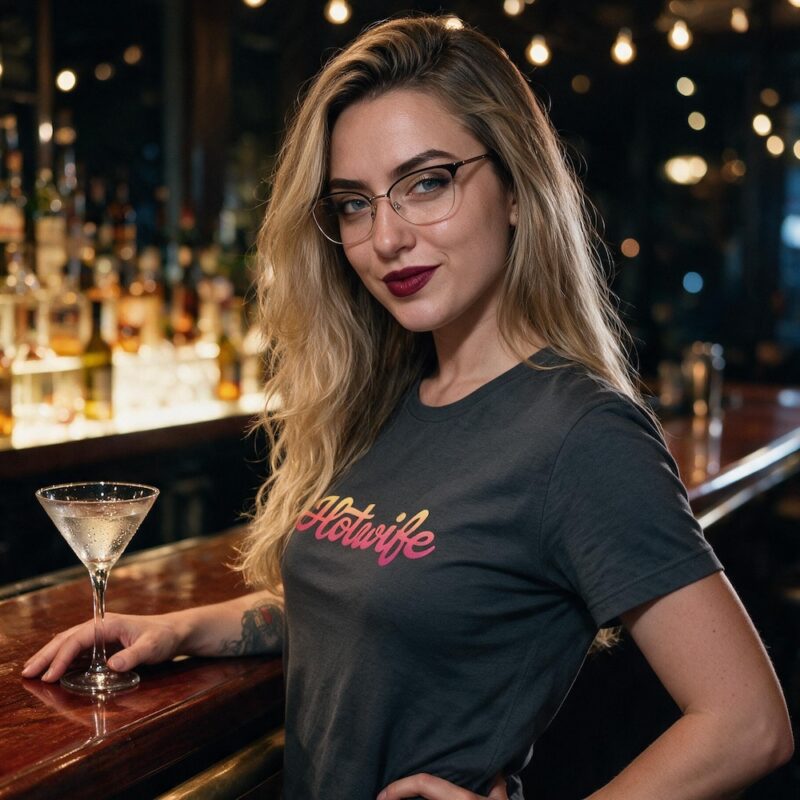
Tier three, stated. Hotwife. “This shirt has seen things.” No ambiguity, no deniability, and a very specific set of rooms it belongs in. Excellent at a lifestyle event. Poor at the school run.
Tier four, you know what you did. No notes.
The practical advice: pick your tier per event, not per wardrobe. Most people who get this wrong own one shirt and wear it everywhere.
-

Vanilla Is For Ice Cream Swinger Lifestyle Tee – Retro Script Graphic Shirt
Price range: $21.99 through $29.32 Select options This product has multiple variants. The options may be chosen on the product page -
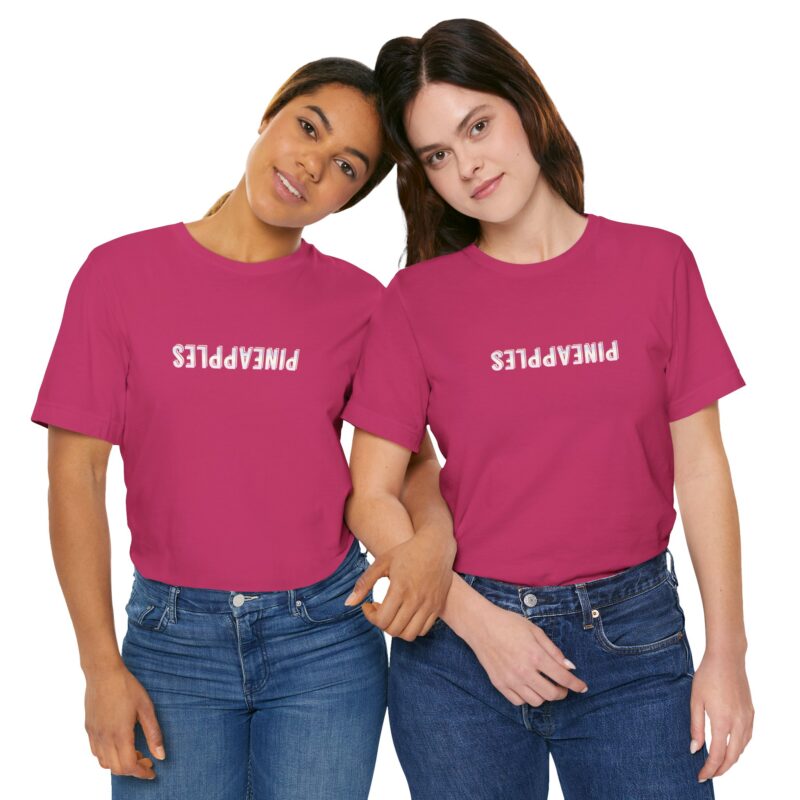
Pineapples Upside Down Tee – Swinger Lifestyle Graphic Shirt
Price range: $21.99 through $24.51 Select options This product has multiple variants. The options may be chosen on the product page -
IYKYK Pineapple > Vanilla Swinger Lifestyle Tee – Retro Sunset Graphic Shirt
Price range: $21.99 through $24.51 Select options This product has multiple variants. The options may be chosen on the product page -
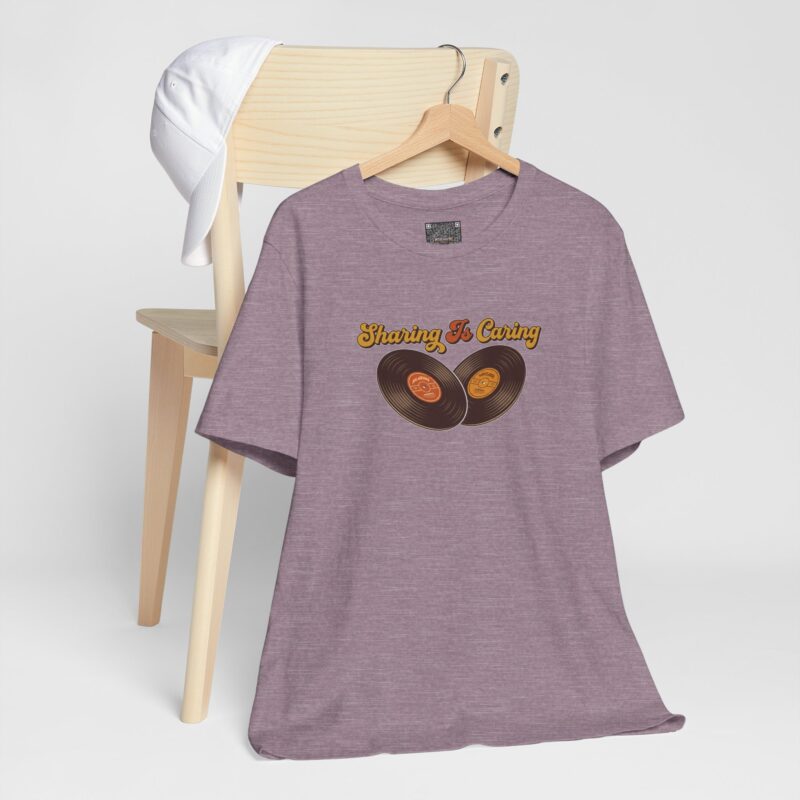
Sharing Is Caring Vinyl Record Swap Tee – Retro Swinger Lifestyle Shirt
Price range: $18.51 through $24.51 Select options This product has multiple variants. The options may be chosen on the product page -
Hotwife Script Tee – Swinger Lifestyle Graphic Shirt
Price range: $21.99 through $24.51 Select options This product has multiple variants. The options may be chosen on the product page -
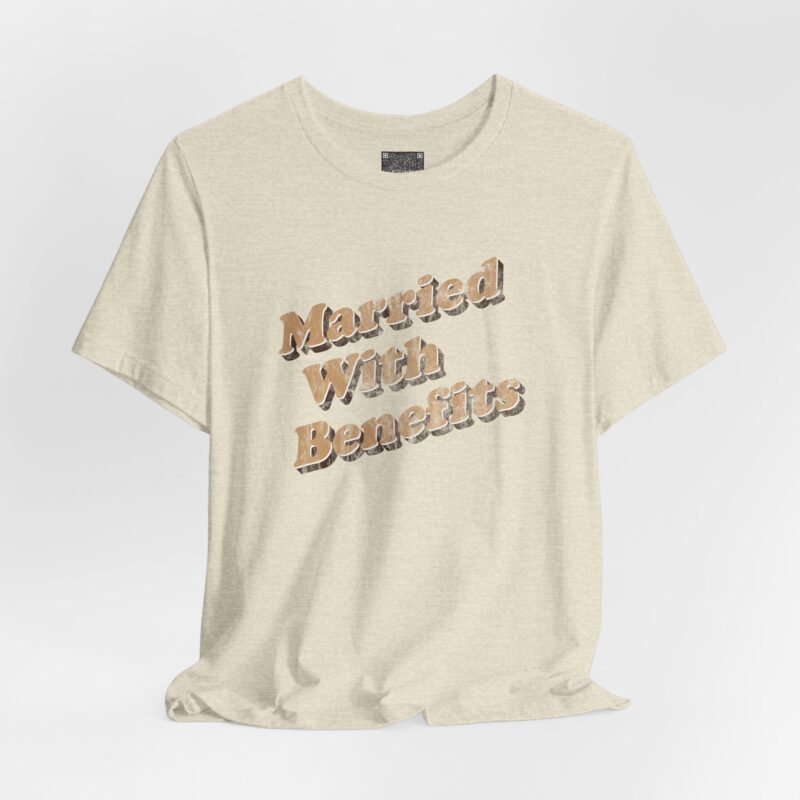
Married With Benefits Tee — Playful Couples Retro Graphic T-Shirt
Price range: $21.99 through $29.32 Select options This product has multiple variants. The options may be chosen on the product page


FAQ
What is the upside-down pineapple symbol? An upside-down pineapple signals that a person or household is open to swinging. Right-side-up, the pineapple is a traditional hospitality symbol; inverting it repurposes that welcome. It appears on cruise cabin doors, RV sites, front doors, and clothing, and it’s the most widely recognized lifestyle symbol.
What does a black ring on the right hand mean? It can signal involvement in the swinging lifestyle, with the right hand contrasting against the left hand’s wedding-ring convention. But the asexual community uses a black ring on the right hand to signal the opposite, a lack of interest in sexual activity, and plenty of people wear black rings purely as jewelry. It’s a weak signal on its own.
Do anklets mean someone is a swinger? Usually not. Anklets appear in hotwife signaling within communities that recognize them, but the widely circulated code (left ankle versus right, gold versus silver) is internet folklore with no basis in actual practice. Most people wearing an anklet are just wearing an anklet.
Are swinger symbols reliable? No, and nobody experienced treats them as such. They’re icebreakers. A symbol suggests someone might be open to a conversation; it never substitutes for having one, and it is never an invitation to approach.
What’s the difference between vanilla and the lifestyle? “Vanilla” describes conventional monogamous relationships, and isn’t an insult. “The lifestyle” is the umbrella term for consensual non-monogamy, particularly swinging. The vocabulary matters more than the symbols: using it correctly identifies you far more reliably than any object.